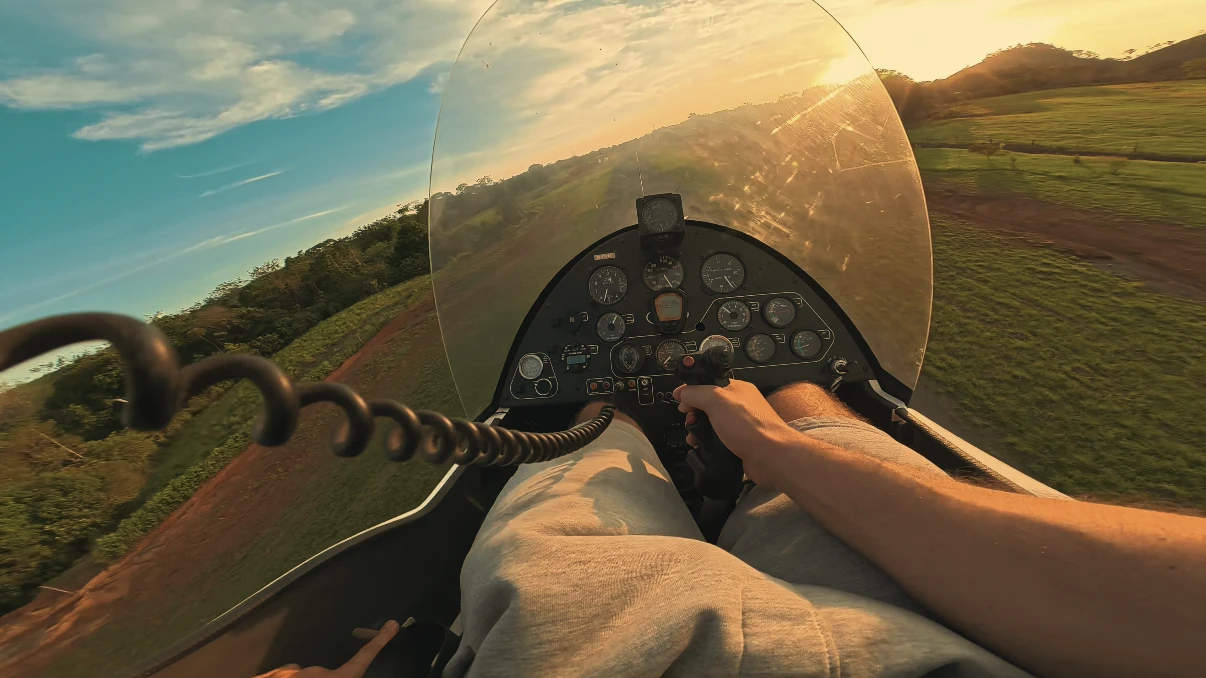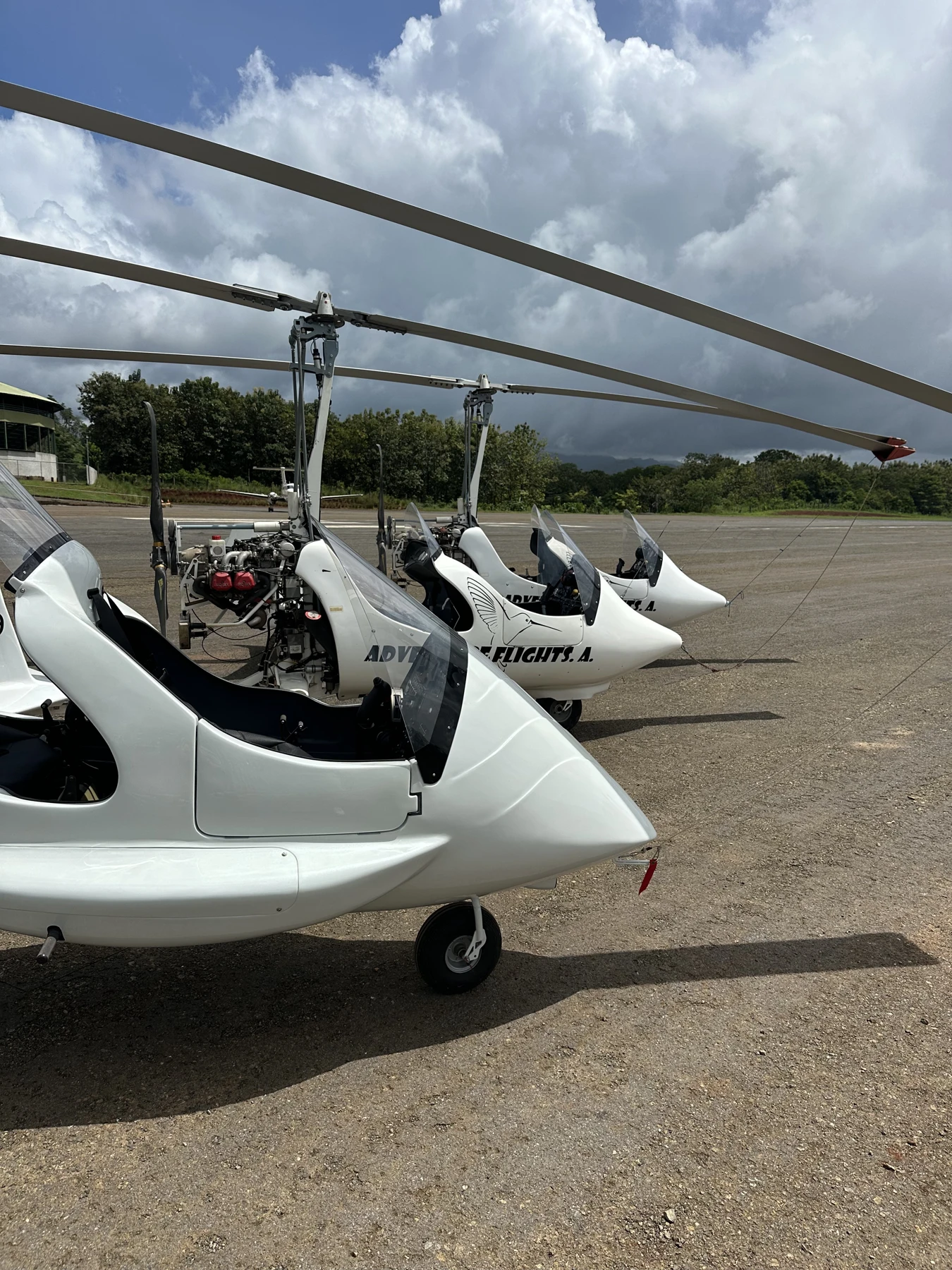
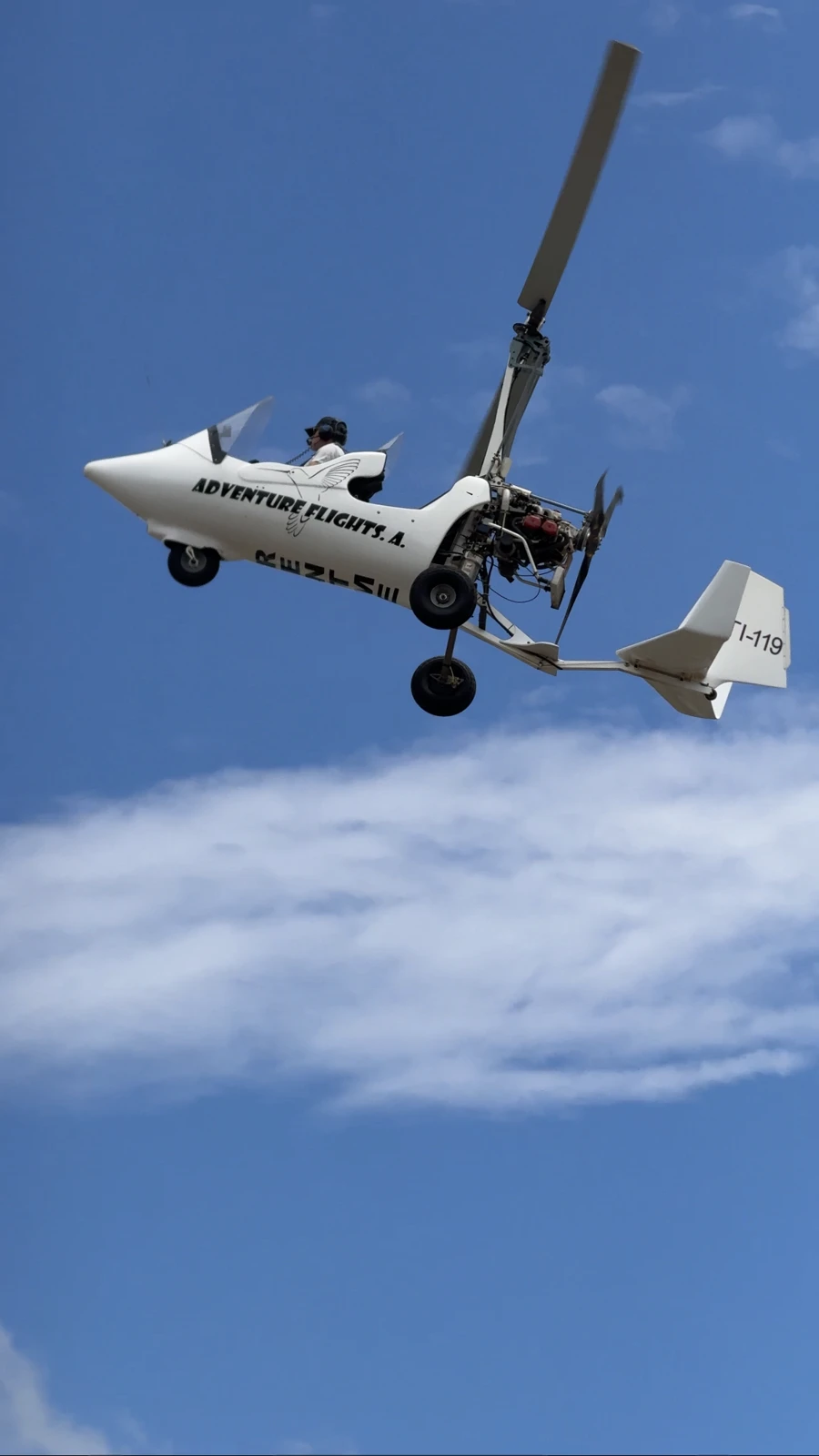
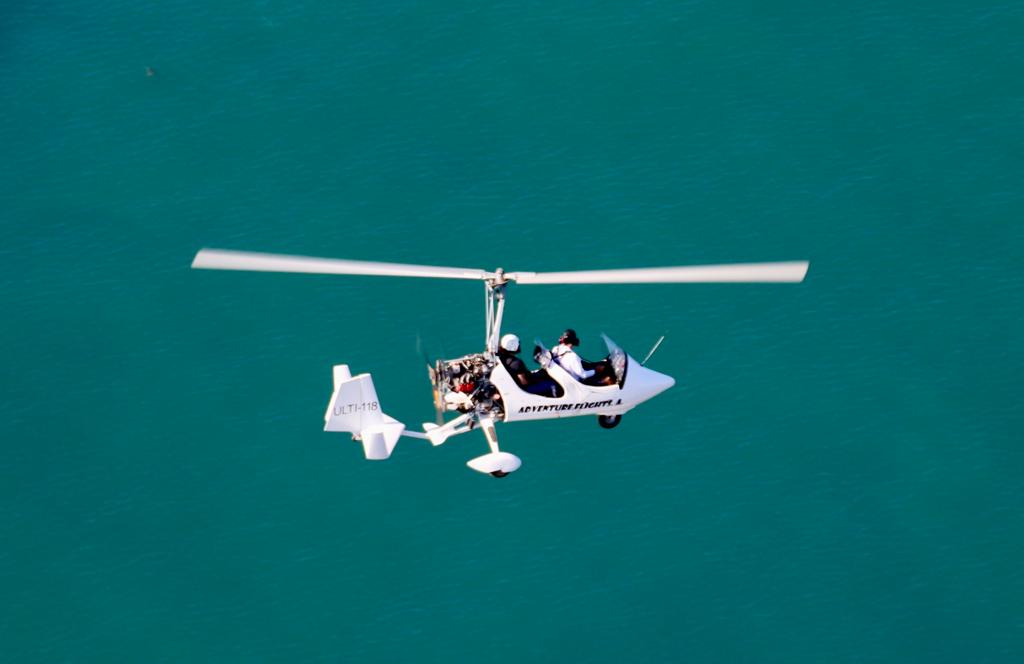
A gyrocopter, also called a gyroplane or autogyro, is a type of rotorcraft. An engine-driven propeller moves it forward. In flight, air flowing through the overhead rotor keeps the blades turning, and the blades produce lift.
How autorotation works
If you’ve seen an aircraft that flies like an aeroplane with a rotor above it, it may have been a gyrocopter. As the aircraft moves forward, air passes up through the rotor. That airflow keeps the blades turning during normal flight. This free-spinning action is called autorotation.
The propeller provides forward thrust and the rotor provides lift. Some models use a device to start spinning the rotor before the takeoff roll.
How it differs from a helicopter
A helicopter’s engine drives the main rotor during normal flight, allowing it to hover over a point. A conventional gyrocopter uses a runway to take off and typically moves forward in level flight.
See the rotor and propeller in our video from the Adventure Flights base (in Spanish). The FAA gyroplane handbook explains autorotation in more detail.
From the early autogyros to today
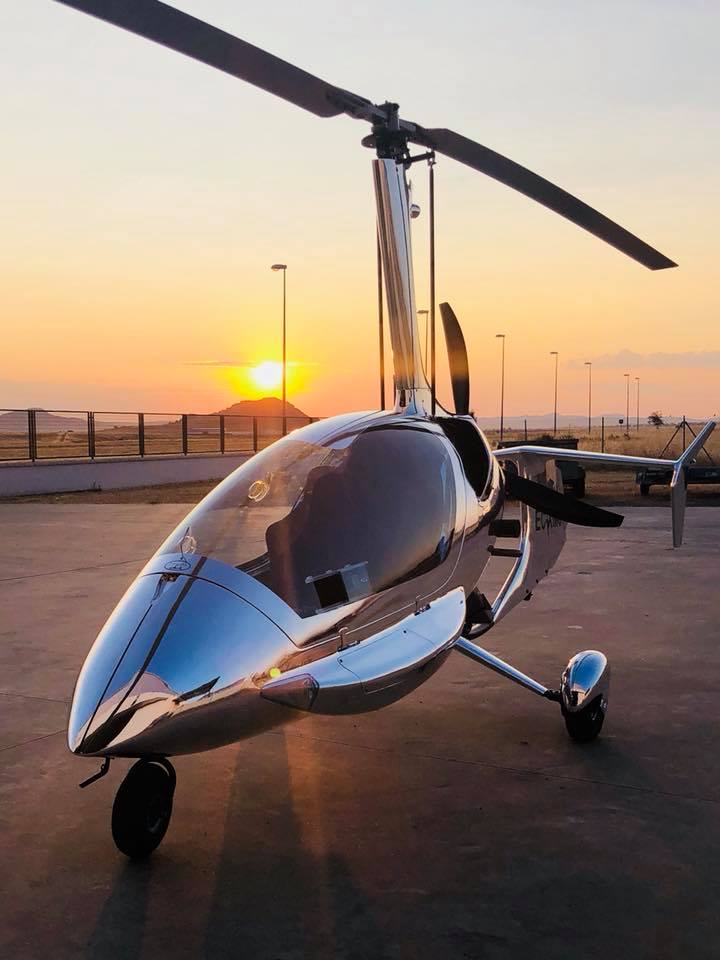
Spanish engineer Juan de la Cierva developed the autogyro in the 1920s. Modern gyrocopters are used for several purposes, including recreational and sightseeing flights.
Where to fly in a gyrocopter in Costa Rica
Adventure Flights departs from Cóbano Airport, near Santa Teresa and Montezuma. Each gyrocopter carries one passenger with the pilot. Flights last 30, 45 or 60 minutes, and the route depends on conditions. If you’re travelling together, ask about consecutive departures.
Read about your first flight as a passenger.